
RECENT POSTS
October 2026
Why an Office Chair is the perfect Christmas gift?
What Is the Best Desk Lamp for Working From Home?
September 2026
How to Choose an Office Chair for Working From Home?
How to Celebrate Halloween in the Office? Decorations, Games and Costume Ideas
August 2026
A4 vs A3 Paper: Which Paper Does Your Office Actually Need?
5 Tips For Improving Employee Wellbeing
July 2026
Heading Back to the Office? Your Complete Return-to-Work Checklist
How to Choose a Height Adjustable Desk?
June 2026
What Do Kids Need for Back to School?
May 2026
How to Set Up an Office Canteen?
April 2026
The Main Difference Between Inkjet and Laser Printers
March 2026
How to Choose the Right Paper Shredder for Your Small Office?
Feb 2026
What Are the Popular Sustainable Office Supplies in Ireland?
March 2025
Celebrate International Cleaning Week: A fresh start for your office
February 2024
The Ultimate Guide to Lever Arch Files
January 2024
The Importance of First Aid in the Office
August 2022
Things to do Before you go Out of Office
June 2022
Office Games and Team Building
March 2022
January 2022
September 2021
There Is Nothing Like a Physical Diary
August 2021
Office Walls That Work For You
July 2021
How To Cope With Heat In The Office
June 2021
Clean Air Helps Prevent Office Illness
April 2021
The Slow and Steady Return to the Office
December 2020
Things to do before you close for Christmas
November 2020
Why an Office Chair is the perfect Christmas gift
October 2020
How to Work from Home Successfully
How Important is Face to Face Communication in Business?
September 2020
July 2020
What office comforts do you miss the most?
June 2020
Father's Day Office Gift Ideas
Three Facts Every Coffee Drinker Should Know
May 2020
The Importance of Having the Right Office Supplies for Homeworking
April 2020
The Three Best Free Video Conferencing Apps
Time to do some spring cleaning
Donating to Charity During Covid-19
March 2020
Office Prevention for COVID-19
February 2020
Why You Should Be Allowed Bring Your Pet To Work
January 2020
5 Ice Breakers You Could Use In Your Next Meeting
Beat the January Blues this year
December 2019
Why you should decorate your office this Christmas
November 2019
Dealing With Monday Morning Blues
Stress Management In The Workplace
October 2019
The Key to Effective Presentations
5 receptionist skills that can affect the entire company
September 2019
Get Some Exercise In to Your Work Day
How to Win at Being a Working Parent
Basic Starter Guide to Packaging
Swap Ideas Day Workspace Setup
August 2019
Three Leadership Styles and One to Avoid
The importance of taking a break
5 Quick tips for a safer workplace
July 2019
How to Choose a Height Adjustable Desk?
Height adjustable desks have quickly gone from a nice-to-have to one of the most popular choices in office interiors, and it's easy to see why. Instead of being stuck in the same position for hours, you can move between sitting and standing whenever it suits you. At Low Cost Office, we help offices across Ireland find furniture that actually works for the people using it, so we've pulled together the products that benefits of height adjustable desking, what to check before you buy.
What to Look Before Buying a Height Adjustable Desk?
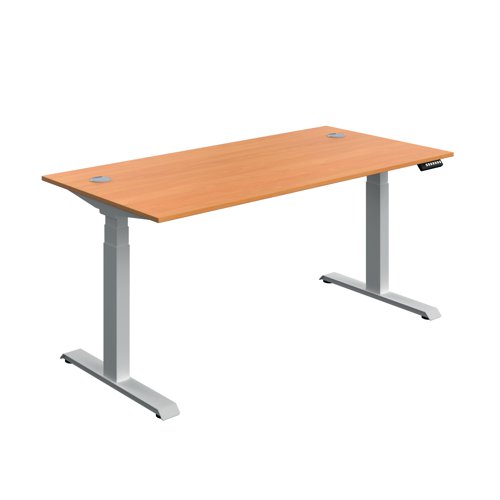
Not all sit-stand desks are the same, so a few checks before you buy will save you hassle later.
1) Height range
The whole point of one of these desks is that it moves, so the range it covers really matters, and it varies quite a bit from one model to the next. If the desk is going to be shared between several people, or used by someone very tall or short, go for one with the widest range you can something like the Leap Single Desk so everyone can find a position that feels natural, whether they're sitting or standing.
2) Weight capacity
Always check what the desk is rated to hold before you commit. Most handle everyday kit like a monitor, laptop and phone without a bother, but heavier setups are where you need to look closely. Overload it and you risk straining or burning out the motor over time, which is an expensive mistake to make.
3) Electric or manual
Most sit-stand desks are electric and rise at the push of a button, which is the easiest option if you'll adjust often. The alternative is a hand-crank model, which costs less but takes a bit of effort each time. How you adjust the height affects ease of use, speed and even noise level, so it's worth deciding early which suits you.
4) Power
If you go electric, have a think about where the desk will sit and how you'll power it. An electric sit-stand model like the Polaris Dual Motor Sit/Stand Desk needs a socket within easy reach, so make sure there's one nearby and you're not left trailing cables across the room. It's a small detail that's easy to forget until the desk arrives and there's nowhere to plug it in.
5) Depth
Depth isn't unique to standing desks, but it's an easy one to overlook. Who's using it and the kind of work they do should guide how deep a surface you need. More room helps if you're running multiple screens or spreading out paperwork, while a simple laptop setup can get by with less.
6) Stability
A good desk should stay rock-steady at full height with no wobble while you type. A solid frame and a broad base are what deliver that, so it's worth checking the construction before you buy a sturdy sit-stand model like the Jemini Sit/Stand Desk with Cable Ports is built to stay steady through the height range. A shaky desk quickly becomes annoying and makes standing work feel less secure.
Benefits of a Height Adjustable Desk

1) Ergonomic comfort
The main draw of a height adjustable desk is how kind it is to your body. Switching between sitting and standing takes the pressure off your back, neck and shoulders, and it makes holding a good posture far less of an effort. Because you can dial the desk in to your exact height, something like the Leap Single Desk lets you stay comfortable and focused right through the day.
2) Better health and wellbeing
Most of us spend around eight hours a day at a desk, and sitting still for that long has been linked to weight gain, back trouble and heart problems. A height adjustable desk nudges you into a more active routine without you really noticing. Alternating between sitting and standing keeps your circulation moving and lowers those health risks over time, and a good habit to aim for is standing 15 to 30 minutes in every hour.
3) More flexibility and collaboration
There's a practical side too. Because the surface drops and rises to suit different people and different tasks, height adjustable desks are brilliant for shared and collaborative spaces, which is exactly what modern, flexible offices need. It's worth browsing the full office desk range to see what fits the way your team works.
Choosing Between Electric and Manual Standing Desk
Both types raise and lower to the same effect the difference is in how you get there. Here's how they compare:
| Feature | Electric | Manual (Hand Crank) |
|---|---|---|
| Adjustment | Push of a button | Turn a hand crank |
| Speed | Fast — a few seconds | Slower — takes more turns |
| Ease of use | Effortless, ideal for frequent switching | Takes physical effort each time |
| Noise | Slight motor hum | Quiet — no motor |
| Height presets | Often available on higher-end models | Not available |
| Power needed | Yes — needs a socket nearby | None |
| Price | Higher upfront | More budget-friendly |
| Best for | Daily sit-stand switching, shared desks | Occasional adjustment, tighter budgets |
How to Calculate Your Ergonomic Desk Height?
There's no single "correct" desk height the right one depends on you, not the desk. The simplest way to find it is the elbow rule: stand (or sit) up straight with your shoulders relaxed and bend your arms to roughly a 90-degree angle. Wherever your elbows sit is where the desk surface should meet your hands. Your forearms stay parallel to the floor and your wrists stay straight as you type, which keeps strain off your shoulders, wrists and lower back.
To dial it in properly, run through these quick checks:
- Elbows — Bent at about 90 degrees, forearms level with the desk and parallel to the floor.
- Wrists — Straight and neutral, not bent up or down while typing.
- Monitor — The top of the screen at or just below eye level, so you look slightly down rather than up.
- Screen distance — Roughly an arm's length away (about 50–70cm) to ease eye strain.
- Feet — Flat on the floor when seated, or supported by a footrest if they don't quite reach.
This is exactly where a height adjustable desk pays off you set it once for sitting, once for standing, and stay comfortable in both.
Find your perfect fit browse our full range of height adjustable desks at Low Cost Office and set your workspace up the right way.
Frequently Asked Questions
1) Are standing desks actually good for you?
Yes, when used sensibly. Alternating between sitting and standing helps improve posture, keeps your circulation moving and can ease back and neck strain from long hours at a desk. The benefit comes from switching positions regularly, not from standing all day.
2) How long should you stand at a standing desk?
A good habit is to stand for around 15 to 30 minutes in every hour, but there's no strict rule. Start with shorter spells, build up gradually, and stand for as long as feels comfortable to you.
3) Can you use a standing desk all day?
You can, but it's not recommended. Standing all day puts its own strain on your legs and back, just as sitting all day does. The healthiest approach is a balance of both throughout your working day.
4) What is the correct height for a standing desk?
It should sit at your standing elbow height arms bent at about 90 degrees with forearms parallel to the floor. For many adults that's somewhere around 95–120cm, but always adjust it to your own body rather than a fixed number.
How to Choose a Height Adjustable Desk?
Height adjustable desks have quickly gone from a nice-to-have to one of the most popular choices in office interiors, and it's easy to see why. Instead of being stuck in the same position for hours, you can move between sitting and standing whenever it suits you. At Low Cost Office, we help offices across Ireland find furniture that actually works for the people using it, so we've pulled together the products that benefits of height adjustable desking, what to check before you buy.
What to Look Before Buying a Height Adjustable Desk?
Not all sit-stand desks are the same, so a few checks before you buy will save you hassle later.
1) Height range
The whole point of one of these desks is that it moves, so the range it covers really matters, and it varies quite a bit from one model to the next. If the desk is going to be shared between several people, or used by someone very tall or short, go for one with the widest range you can something like the Leap Single Desk so everyone can find a position that feels natural, whether they're sitting or standing.
2) Weight capacity
Always check what the desk is rated to hold before you commit. Most handle everyday kit like a monitor, laptop and phone without a bother, but heavier setups are where you need to look closely. Overload it and you risk straining or burning out the motor over time, which is an expensive mistake to make.
3) Electric or manual
Most sit-stand desks are electric and rise at the push of a button, which is the easiest option if you'll adjust often. The alternative is a hand-crank model, which costs less but takes a bit of effort each time. How you adjust the height affects ease of use, speed and even noise level, so it's worth deciding early which suits you.
4) Power
If you go electric, have a think about where the desk will sit and how you'll power it. An electric sit-stand model like the Polaris Dual Motor Sit/Stand Desk needs a socket within easy reach, so make sure there's one nearby and you're not left trailing cables across the room. It's a small detail that's easy to forget until the desk arrives and there's nowhere to plug it in.
5) Depth
Depth isn't unique to standing desks, but it's an easy one to overlook. Who's using it and the kind of work they do should guide how deep a surface you need. More room helps if you're running multiple screens or spreading out paperwork, while a simple laptop setup can get by with less.
6) Stability
A good desk should stay rock-steady at full height with no wobble while you type. A solid frame and a broad base are what deliver that, so it's worth checking the construction before you buy a sturdy sit-stand model like the Jemini Sit/Stand Desk with Cable Ports is built to stay steady through the height range. A shaky desk quickly becomes annoying and makes standing work feel less secure.
Benefits of a Height Adjustable Desk
1) Ergonomic comfort
The main draw of a height adjustable desk is how kind it is to your body. Switching between sitting and standing takes the pressure off your back, neck and shoulders, and it makes holding a good posture far less of an effort. Because you can dial the desk in to your exact height, something like the Leap Single Desk lets you stay comfortable and focused right through the day.
2) Better health and wellbeing
Most of us spend around eight hours a day at a desk, and sitting still for that long has been linked to weight gain, back trouble and heart problems. A height adjustable desk nudges you into a more active routine without you really noticing. Alternating between sitting and standing keeps your circulation moving and lowers those health risks over time, and a good habit to aim for is standing 15 to 30 minutes in every hour.
3) More flexibility and collaboration
There's a practical side too. Because the surface drops and rises to suit different people and different tasks, height adjustable desks are brilliant for shared and collaborative spaces, which is exactly what modern, flexible offices need. It's worth browsing the full office desk range to see what fits the way your team works.
Choosing Between Electric and Manual Standing Desk
Both types raise and lower to the same effect the difference is in how you get there. Here's how they compare:
| Feature | Electric | Manual (Hand Crank) |
|---|---|---|
| Adjustment | Push of a button | Turn a hand crank |
| Speed | Fast — a few seconds | Slower — takes more turns |
| Ease of use | Effortless, ideal for frequent switching | Takes physical effort each time |
| Noise | Slight motor hum | Quiet — no motor |
| Height presets | Often available on higher-end models | Not available |
| Power needed | Yes — needs a socket nearby | None |
| Price | Higher upfront | More budget-friendly |
| Best for | Daily sit-stand switching, shared desks | Occasional adjustment, tighter budgets |
How to Calculate Your Ergonomic Desk Height?
There's no single "correct" desk height the right one depends on you, not the desk. The simplest way to find it is the elbow rule: stand (or sit) up straight with your shoulders relaxed and bend your arms to roughly a 90-degree angle. Wherever your elbows sit is where the desk surface should meet your hands. Your forearms stay parallel to the floor and your wrists stay straight as you type, which keeps strain off your shoulders, wrists and lower back.
To dial it in properly, run through these quick checks:
- Elbows — Bent at about 90 degrees, forearms level with the desk and parallel to the floor.
- Wrists — Straight and neutral, not bent up or down while typing.
- Monitor — The top of the screen at or just below eye level, so you look slightly down rather than up.
- Screen distance — Roughly an arm's length away (about 50–70cm) to ease eye strain.
- Feet — Flat on the floor when seated, or supported by a footrest if they don't quite reach.
This is exactly where a height adjustable desk pays off you set it once for sitting, once for standing, and stay comfortable in both.
Find your perfect fit browse our full range of height adjustable desks at Low Cost Office and set your workspace up the right way.
Frequently Asked Questions
1) Are standing desks actually good for you?
Yes, when used sensibly. Alternating between sitting and standing helps improve posture, keeps your circulation moving and can ease back and neck strain from long hours at a desk. The benefit comes from switching positions regularly, not from standing all day.
2) How long should you stand at a standing desk?
A good habit is to stand for around 15 to 30 minutes in every hour, but there's no strict rule. Start with shorter spells, build up gradually, and stand for as long as feels comfortable to you.
3) Can you use a standing desk all day?
You can, but it's not recommended. Standing all day puts its own strain on your legs and back, just as sitting all day does. The healthiest approach is a balance of both throughout your working day.
4) What is the correct height for a standing desk?
It should sit at your standing elbow height arms bent at about 90 degrees with forearms parallel to the floor. For many adults that's somewhere around 95–120cm, but always adjust it to your own body rather than a fixed number.
